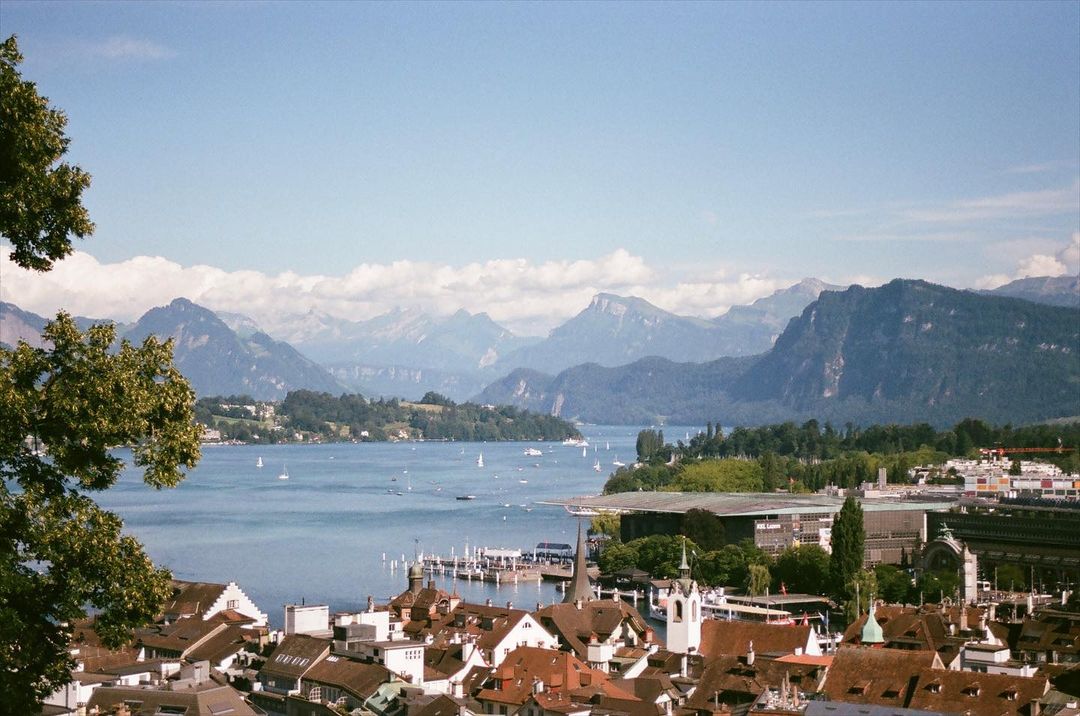
Switzerland would be a mighty big place if it were ironed flat.
Mark Twain
Zurich
Zurich was the first leg of our trip since it is located near an international airport. With a world-renowned train system, we decided to snake our way through central Switzerland. Below are some recommendations from our first stop.
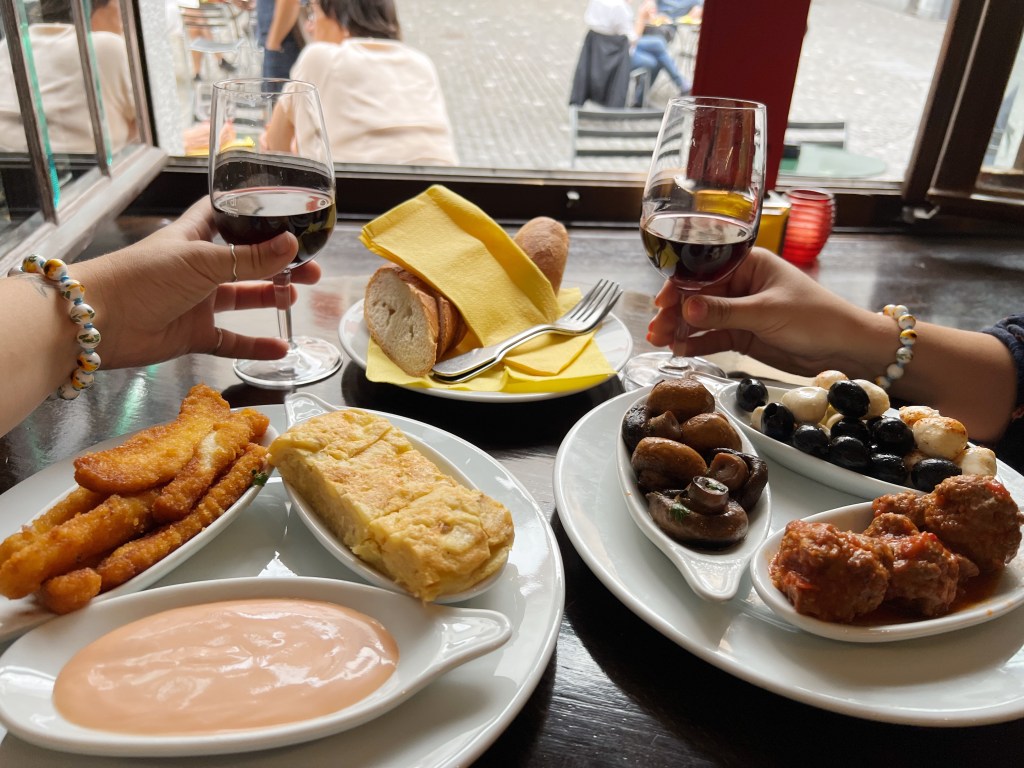
Lindenhof, which is the old town of Zurich, provides a fantastic vantage point over the city with nearby attractions such as the Urania, which is an observatory that opened its doors to visitors in 1907.
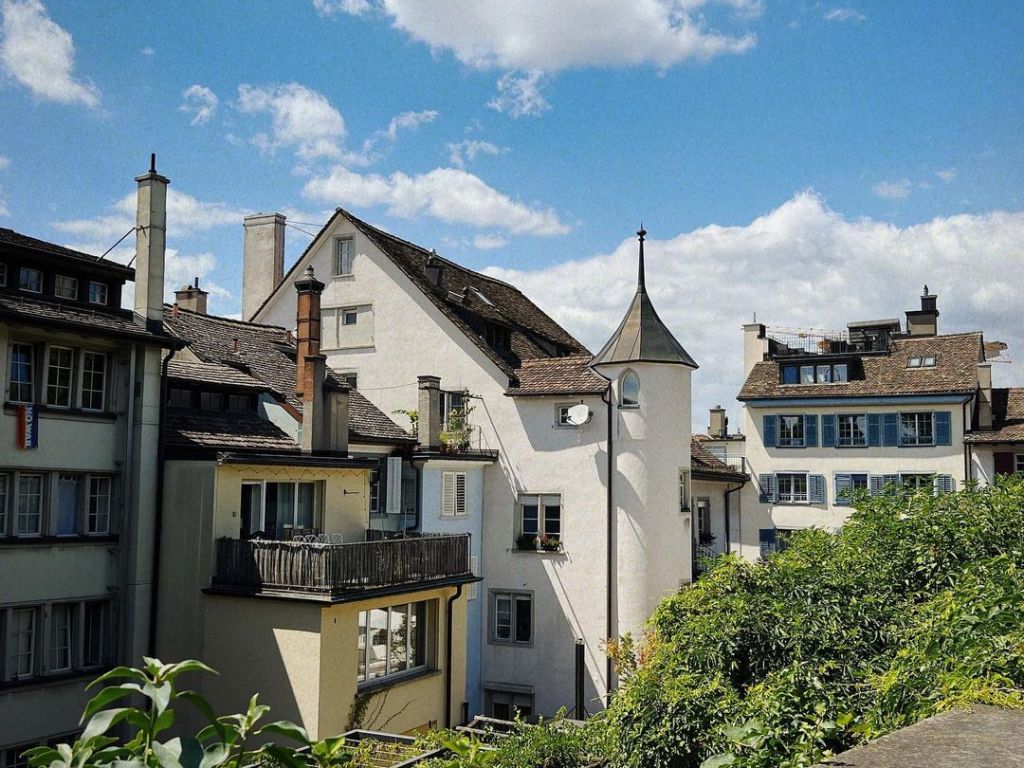
Neu Markt 17 is an interior design store that is just as much of a marketplace as it is a playground. Its showrooms are like a maze with something exciting around every turn. I highly recommend this stop if you’re into design or trying to beat a cloudy day.
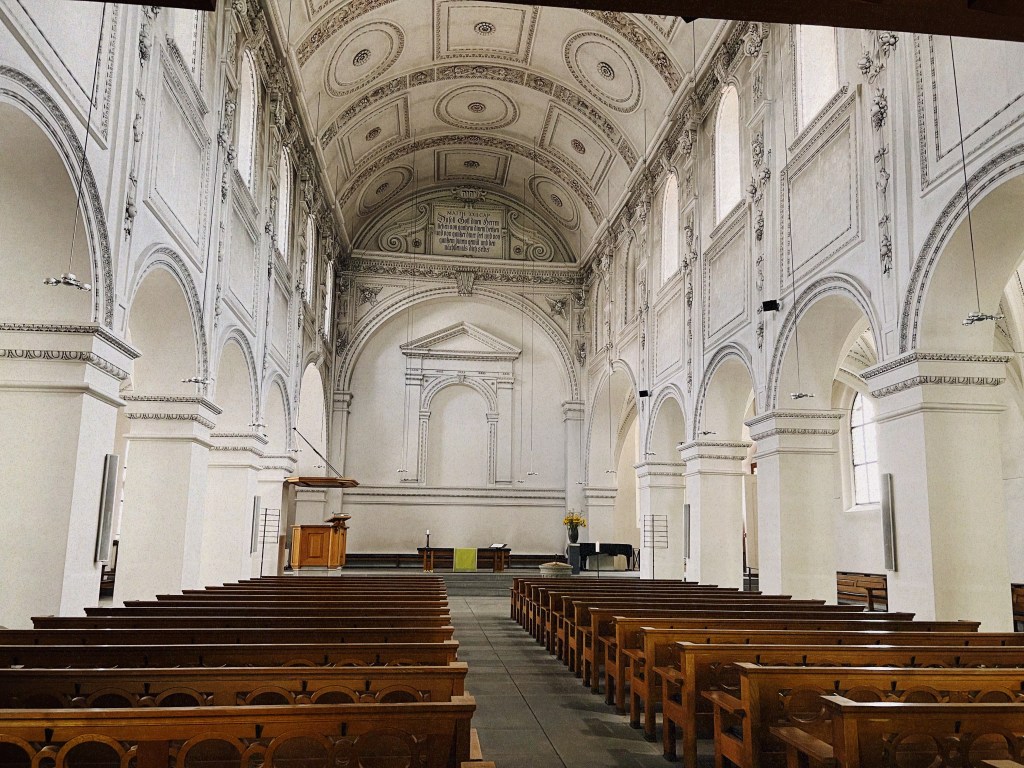
Predigerkirche is a beautiful Protestant-reformed church in the Old City of Zurich and is highly recommended for any travelers who enjoy religious architecture.
Blatterwiese is a park located on Lake Zurich which is accessible via water taxi. There are restaurants, swimming, and public spaces littered along the way as well as a Botanical Garden that is about fifteen minutes inland on foot.
Limmat River is a hard-to-miss feature in Zurich considering it is the river that runs through the city. With plenty of restaurants and seating littered along the water, it is a great place to rest during breaks or at the end of the day.

Rhine Falls is about an hour north of Zurich’s city center, consisting of natural waterfalls and plenty of footpaths to explore. A half day here is a beautiful escape to nature. Although, if you spend enough time in Switzerland, it’s not that difficult to get lost in its natural beauty wherever you are.
Lucerne
Lucerne (or Luzern) was the second leg of our Switzerland trip. Out of all the cities we visited, Lucerne was by far our favorite.
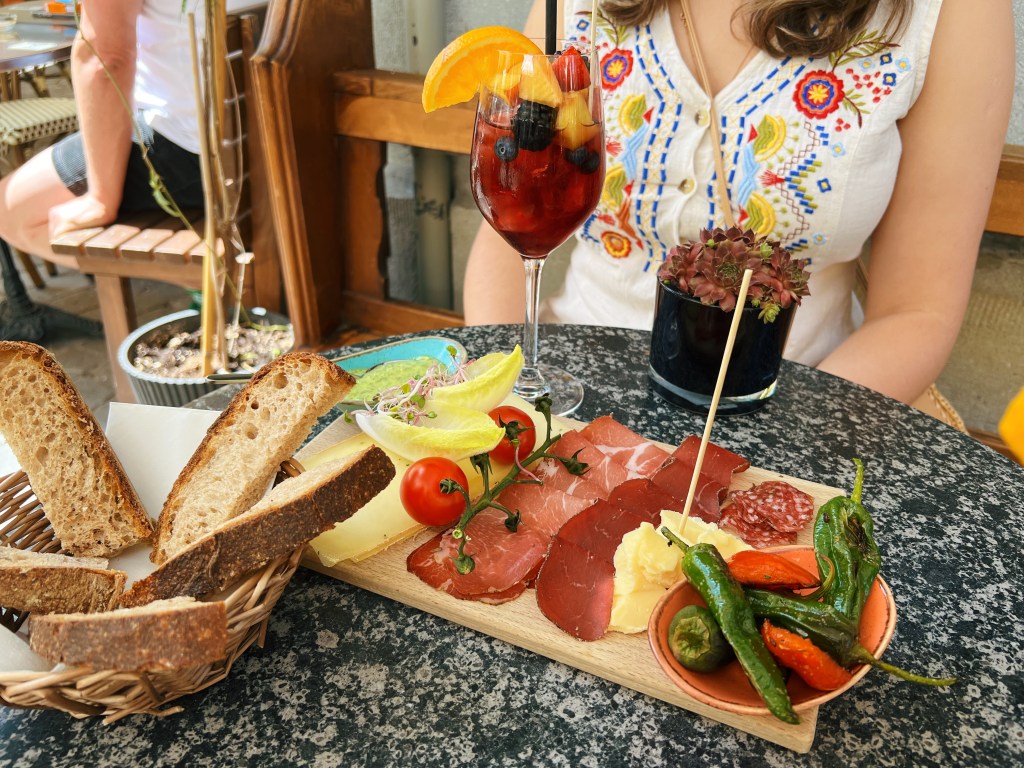
Slow-paced yet jam-packed with plenty to do, I highly recommend strolling through and taking midday breaks by the Reuss River (there are steps to dip your feet in – but mind that they’re slippery!)
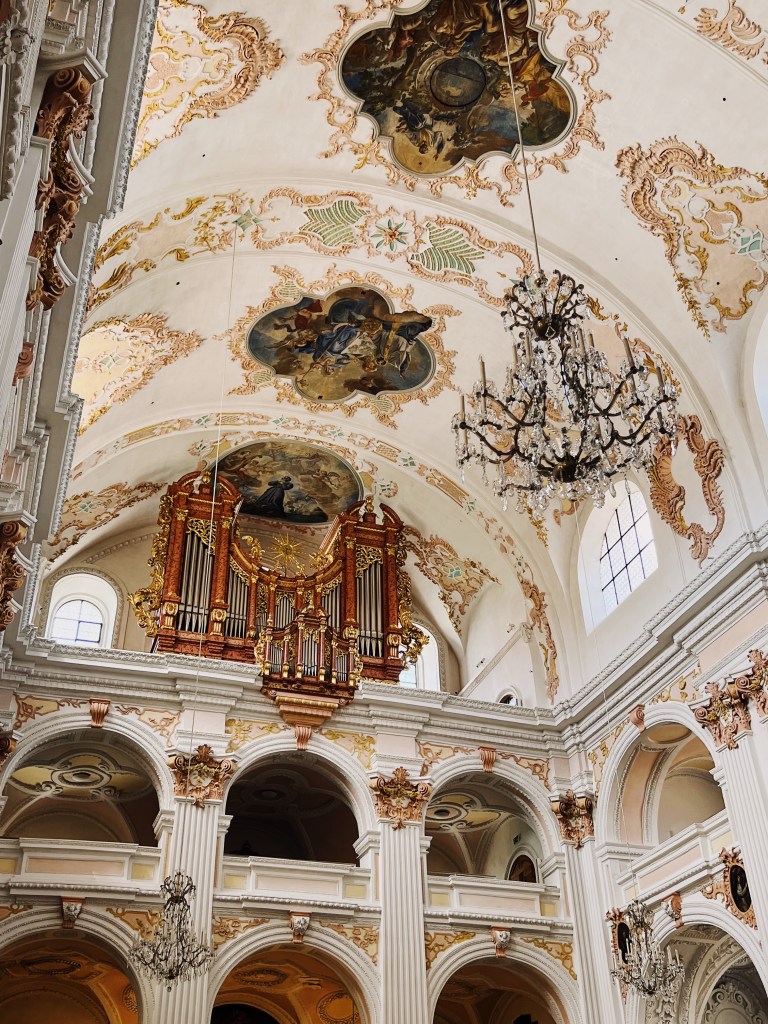
Right on the banks of the Reuss River is the Jesuitenkirche Luzern. Its central location is an easy detour for your itinerary if you enjoy religious architecture or want to light a candle for a loved one.
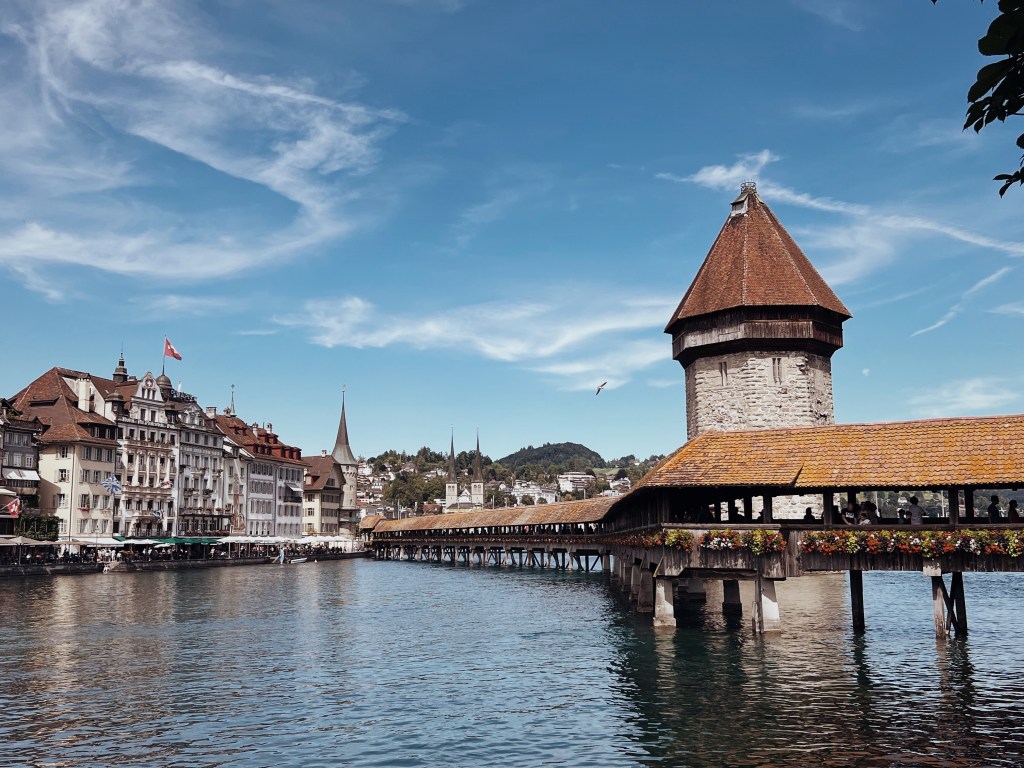
Kapellbrücke or the ‘Chapel Bridge’ is another can’t-miss on the Lucerne itinerary. Running over the Reuss River is the world’s oldest surviving truss bridge. Take a walk over history and don’t forget to look up! Although the bridge was damaged by fire in 1993, there is still 17th-century artwork that covers its walls.
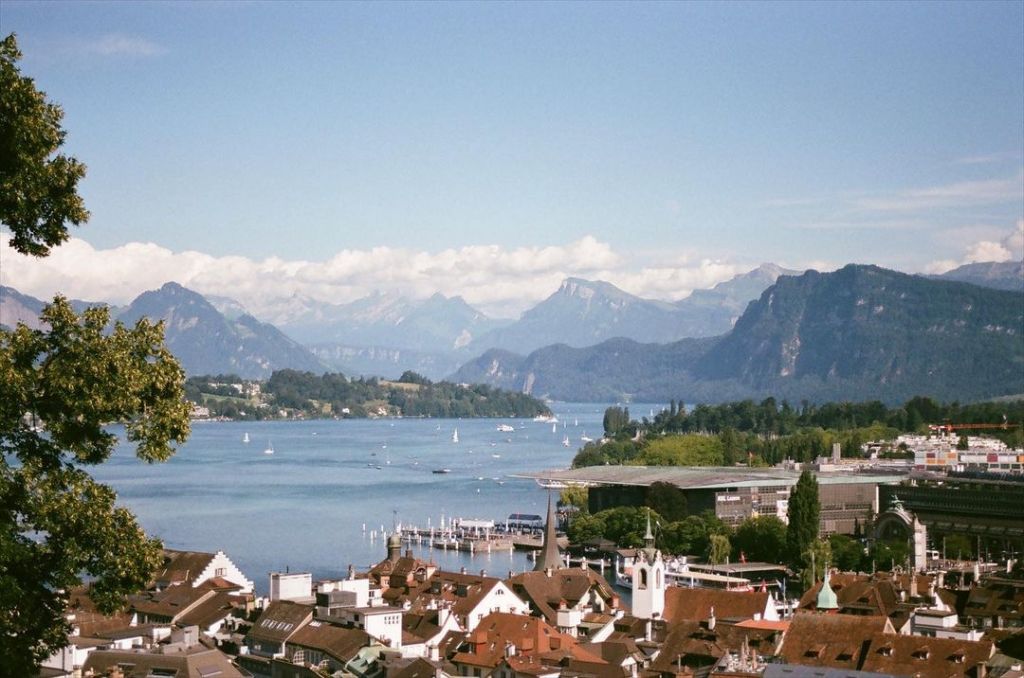
If you want to work in a leg day, step out of the city center to the Musegg Wall and visit its nine towers. Built in the 13th century, these city walls fortified the Old Town and protected their people from their enemies. Besides getting some nice views, you’ll also get a nice burn in your thighs!
Mount Pilatus was the mountain we chose over Mount Rigi, but both ranges are accessible via train from Lucerne. Once we rode into Kriens, the town located at the base of Mount Pilatus, we rode up the famous Swiss gondolas.
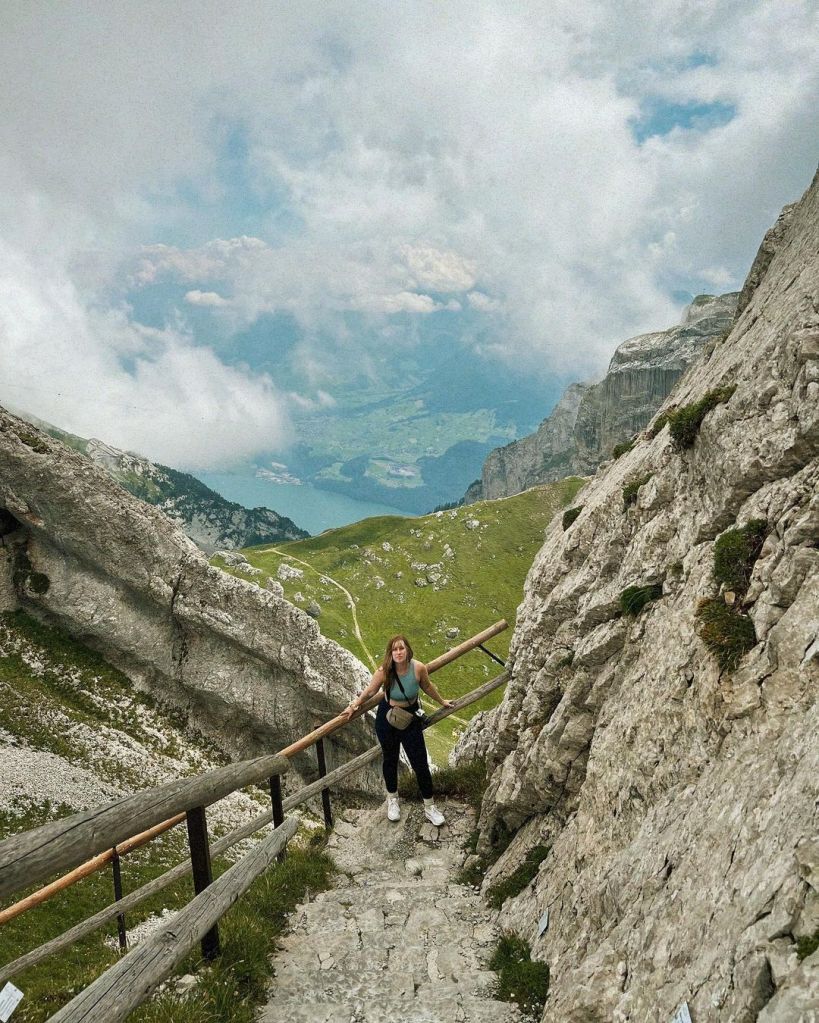
Halfway up the mountain, you have the opportunity for alpine sledding, which is a can’t-miss. You’ll get to zoom through the fairytale landscape and enjoy the cattle and goats as you’re lugged back up the track.
After the short excursion, you can take the next gondola quite literally through the clouds, where you can see rivers, lakes, and towns from the summit of Mount Pilatus. This hike was not arduous at all with flat paved trails and guided reading for local biodiversity.

Instead of taking the same way down, we rode the steepest cogwheel train in the world down to the port at Alpnachstad.

After taking in some beautiful views, we rode the local ferry back to Lucerne.
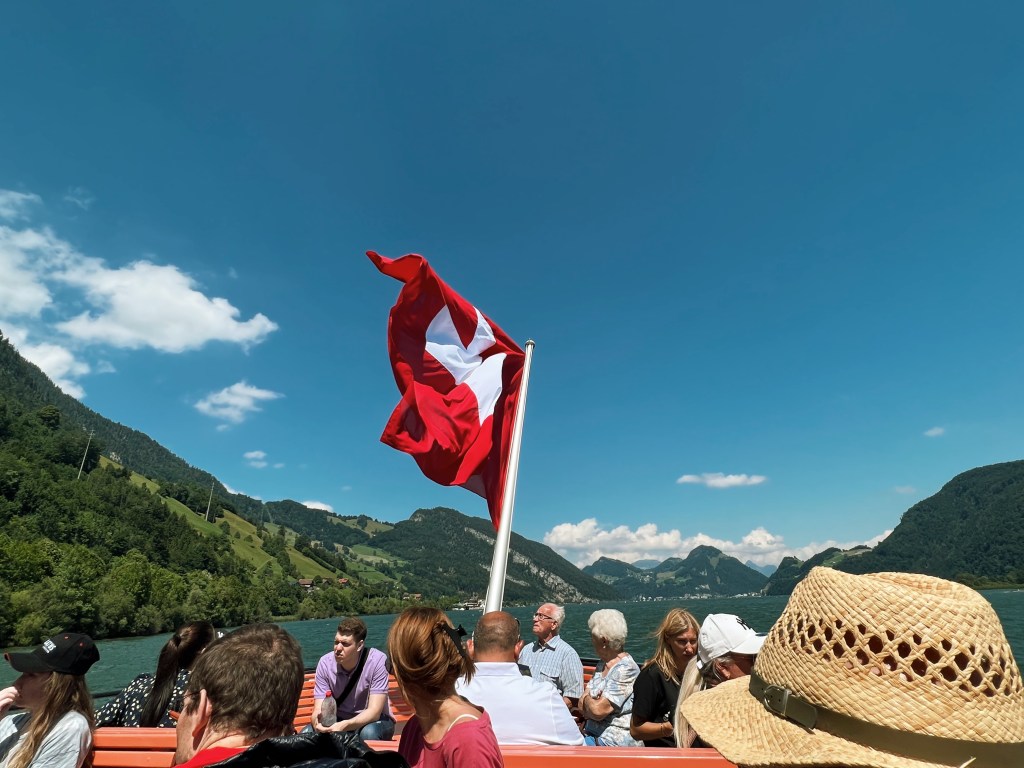
After trying some classic fondue, we enjoyed some drinks on the river at La Bonne Cave before turning in for the night.
Interlaken
Schynige Platte was our first excursion when we reached Interlaken. While there isn’t much in Interlaken itself, it’s the perfect central point for all the surrounding activities. Schynige Platte is a can’t-miss if you’re passing through this region.
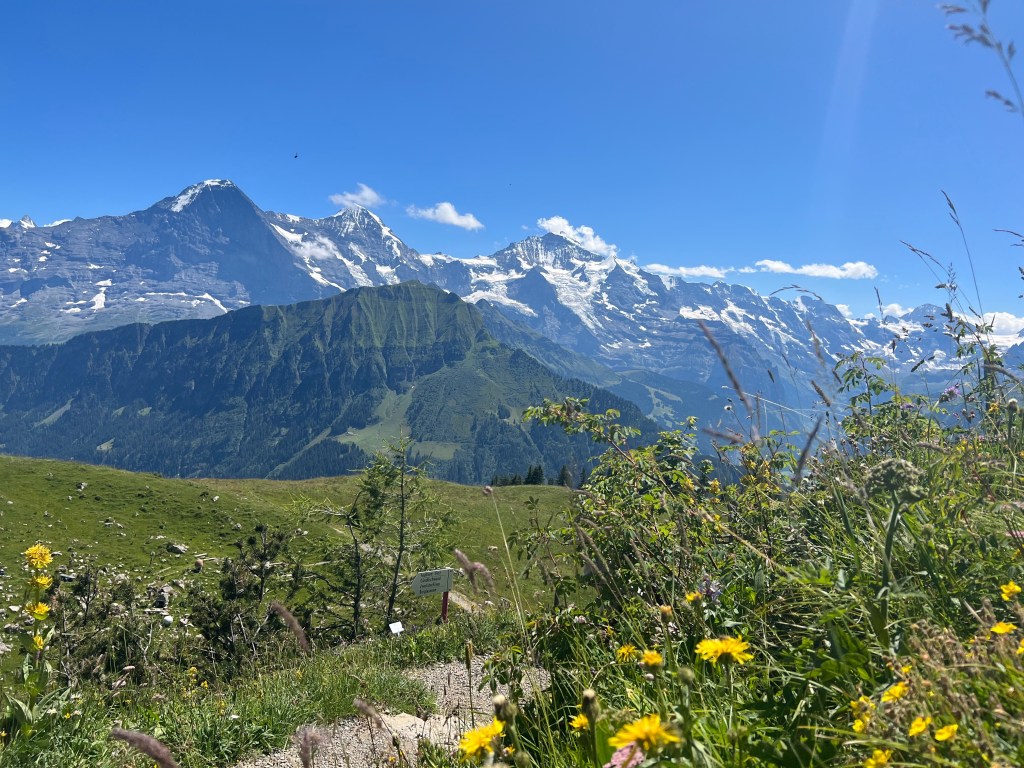
After a beautiful train ride with a view of the Swiss Alps, you pull up to a station that overlooks everything.
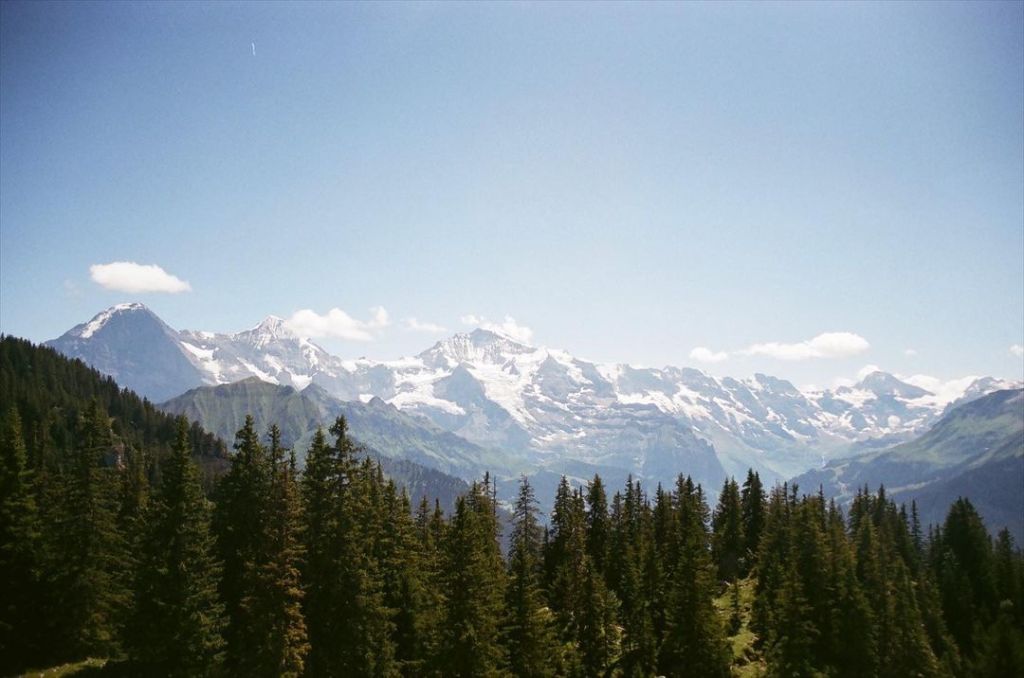
Lauterbrunnen, whose name translates to “many fountains”, is less than a thirty-minute train ride south from Interlaken and is essential for any traveler’s Swiss itinerary. With a gorgeous view of the famous mountain, Jungfrau, and hundreds of waterfalls pouring into the valley, it is quite a sight to behold. The view is so unbelievable that your eyes will experience the unusual phenomenon of parallax – that’s how grand Lauterbrunnen is!
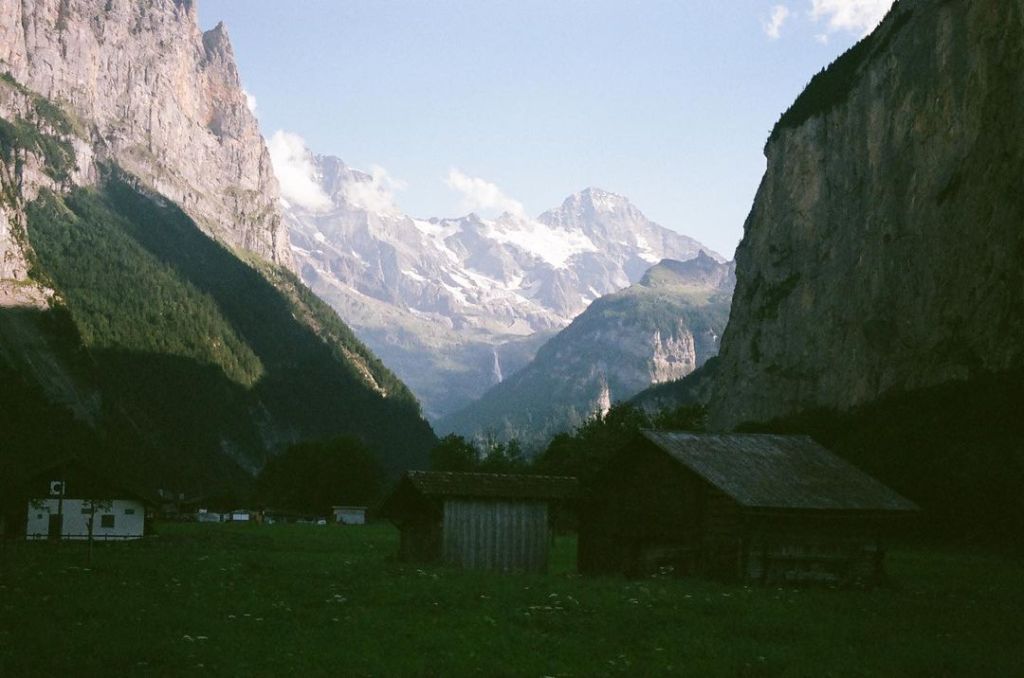
Gimmelwald is only accessible via gondola – I’ve heard some residents actually parachute down the cliff when they need to go grocery shopping in the valley below. Now, that’s an exciting errand run.
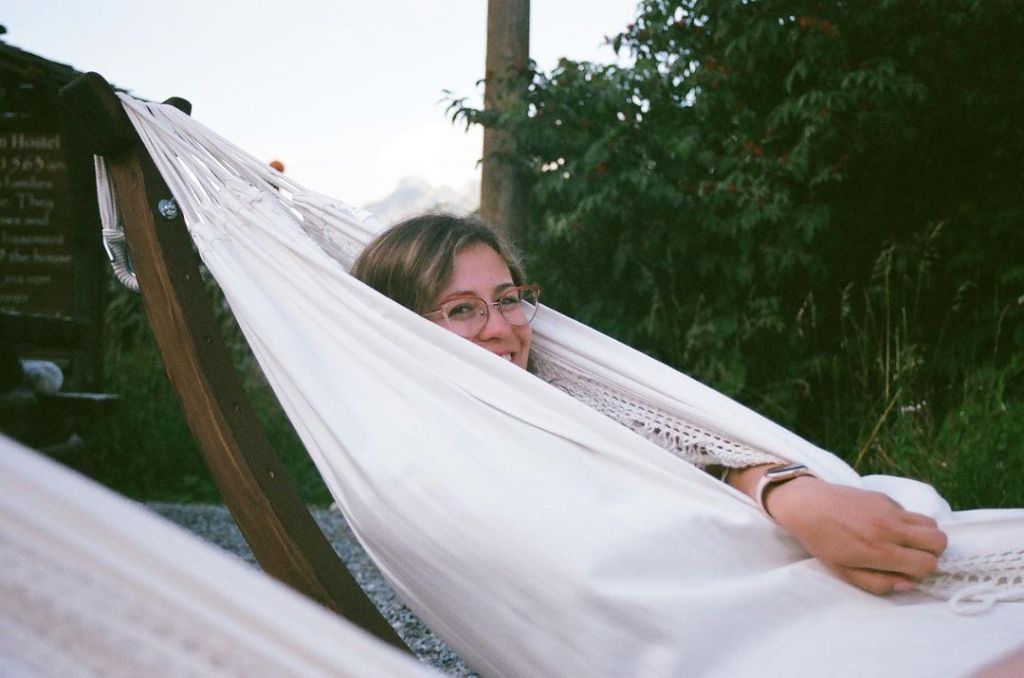
During my visit to this tiny village, I visited the Mountain Hostel and enjoyed a tall cider and a breathtaking view. Between the hammocks, fires, and live music, I promised myself I’d stay at this hostel for my next visit.
During the warm season in Bern, the Aare River becomes the best mode of transportation to float from point A to point B. To keep your essentials dry, you can go to a local marketplace and grab a waterproof pack. You can also add on an inflatable tube to hang onto, but we discovered most locals just use their pack as a flotation device.
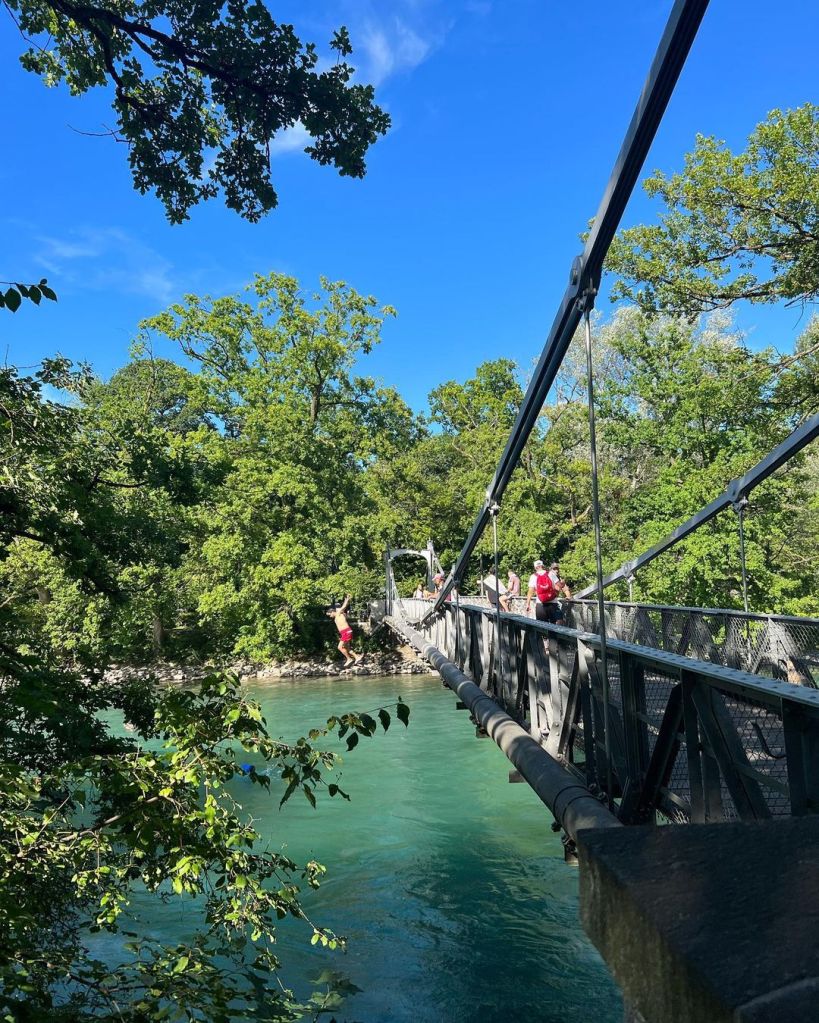
There are plenty of entry points into the river, but if you want to be adventurous, you can leap into the water via bridge! Don’t worry if you get cold feet, the locals will cheer you on!
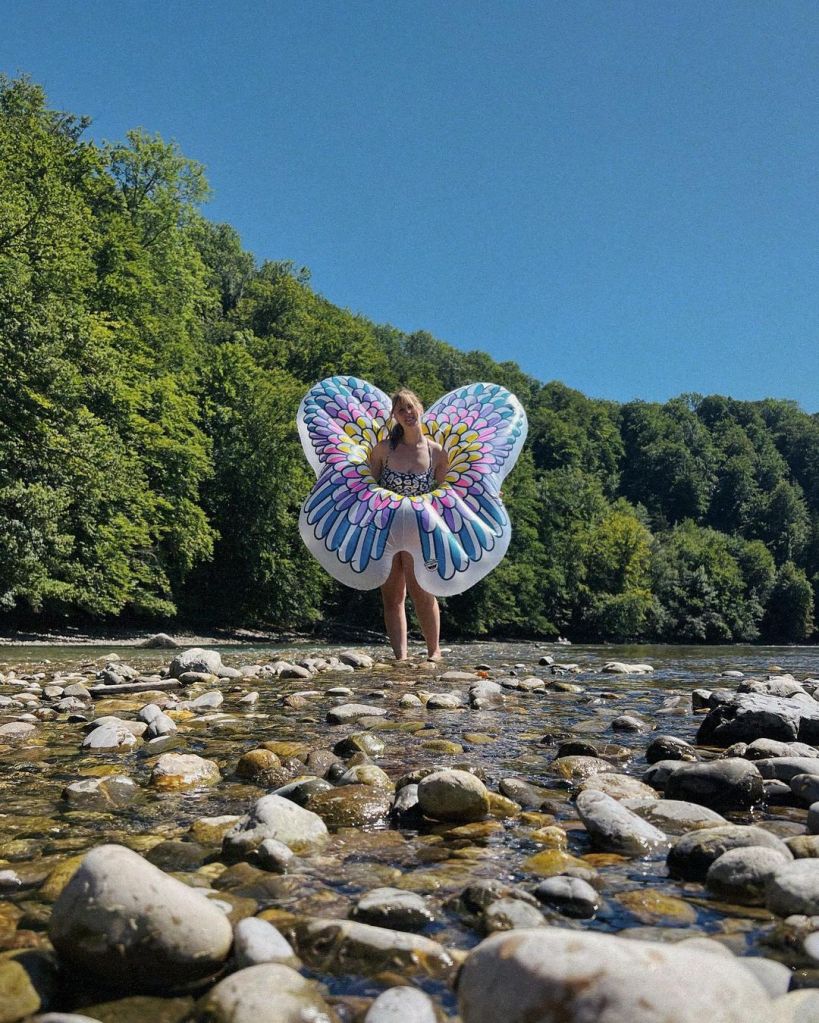
Another spot to go rafting on the Aare River is near the Aare Tunnel. While this tunnel was daunting to approach, there was peace and quiet on the other side. If you want to be unprepared like us, you can manually blow up your floaties for thirty minutes before enjoying a lazy-river-like ride down a more nature-oriented route…or be smart and bring a hand pump.
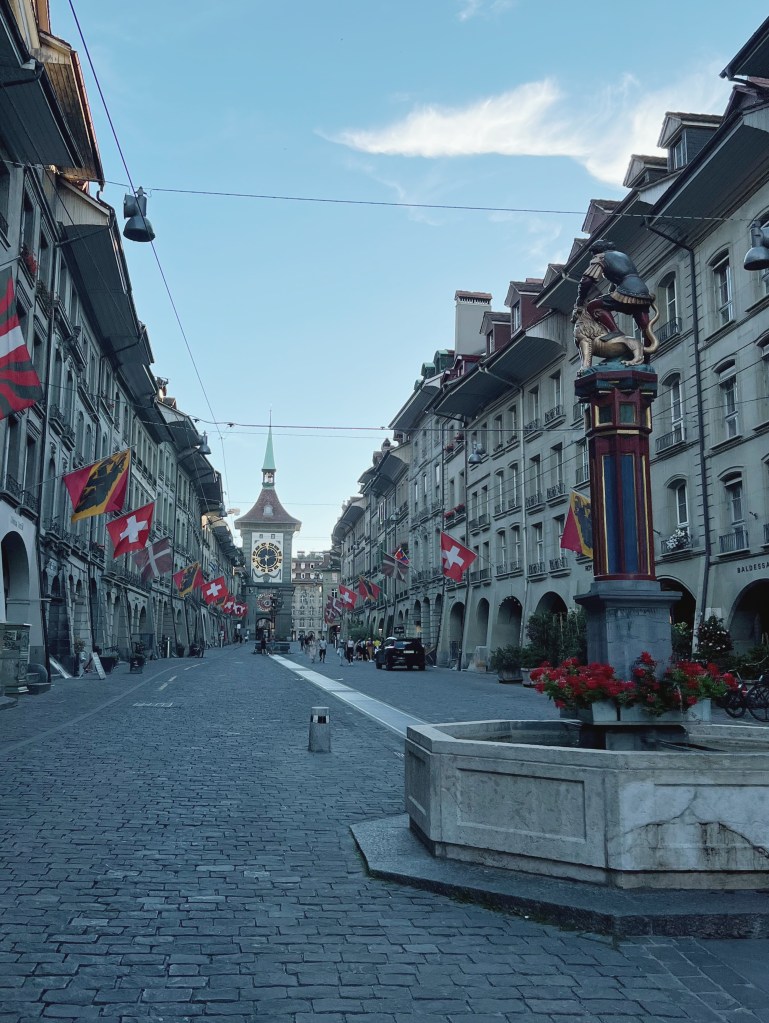
Before heading back to Interlaken, we enjoyed dinner at Frohsinn in the inner city, which is located on Munstergasse, a street flanked by flags of every country and plenty of restaurant options.
While you’re in this section of the city, it is also worth checking out the gothic cathedral, Berner Munster, and the Zytglogge, a medieval clocktower with meticulous beauty and detail.
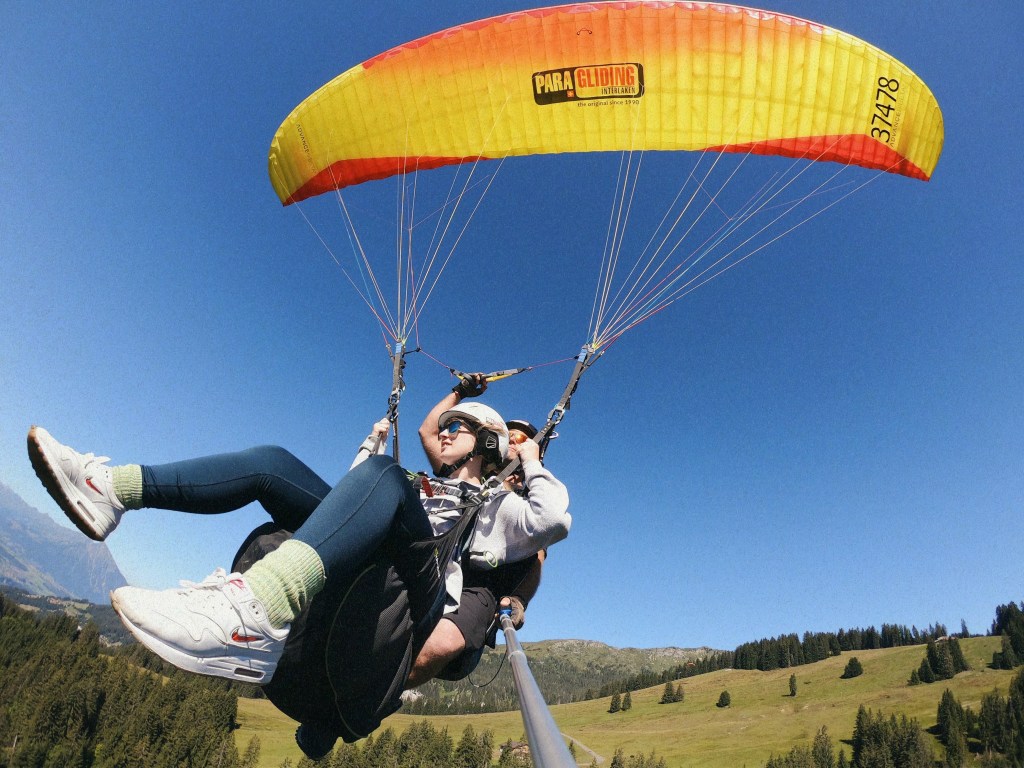
Our final day in Interlaken was an action-packed day where we went paragliding in the morning and white water rafting in the afternoon – two activities I highly recommend during your stay in Switzerland. For paragliding, we recommend Paragliding Interlaken. They were kind and efficient, picking us up from our hotel and taking care of us as we floated off into the Swiss countryside. This amazing ride was immortalized in some cheesy goPro photos provided by our instructors.
While paragliding got our adrenaline going, white water rafting with OUTDOOR Rafting was incomporable! Since my travel buddy used to row, she volunteered to lead our boat…which by default made me volunteer with her (Thanks, Ivanna).
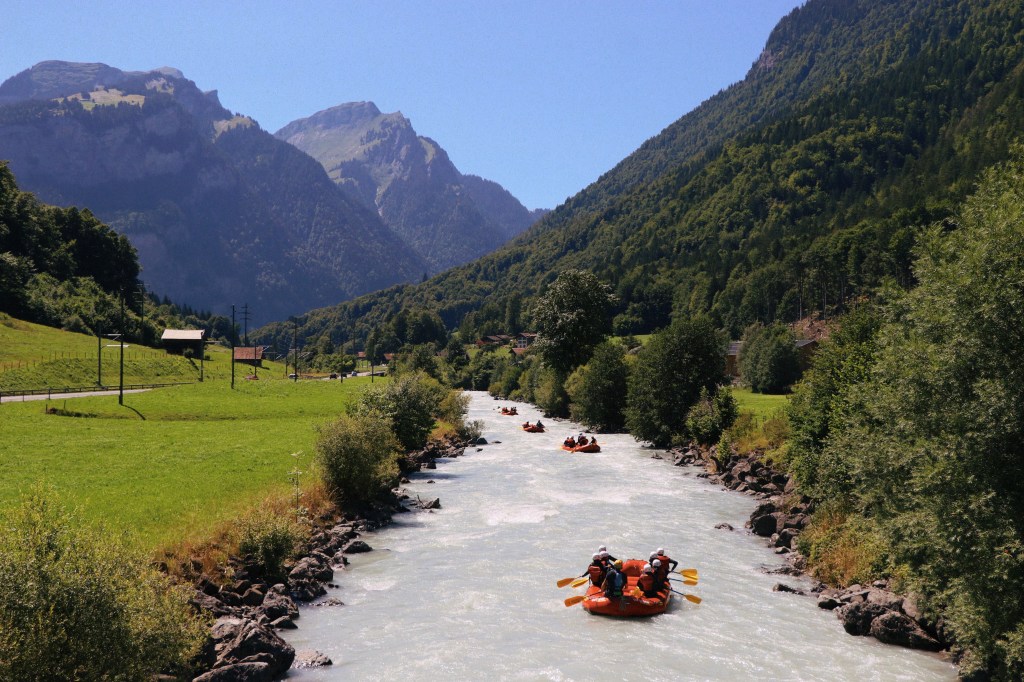
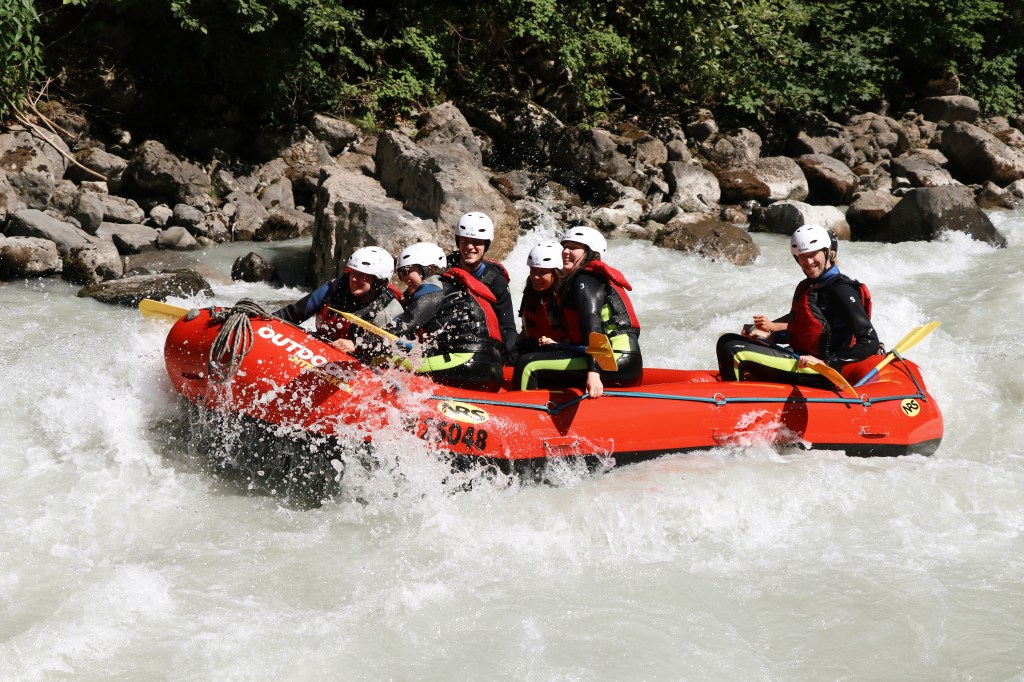
While I was reluctant at first, I think we did a pretty amazing job following and setting instructions with our team that consisted of a professional rafter and a Belgium family. However, even with our diligence, we still managed to slam into a ton of boulders. Thank god they provided us with all the necessary gear to protect ourselves.
But, our instructor did not stop at gear when it came to safety. Once the currents softened, he encouraged us to practice rescuing each other…which means leaping into rushing glacial water. When in Switzerland, right?
At the very end of our rafting trip, we drifted into Lake Thun and witnessed the cold white waters mixing with the warm lake water, which was a very surreal thing to see and feel. This was definitely one of my favorite activities of the trip.
After such an adventurous day, our Interlaken leg was concluded with a good night’s sleep.
Montreux
Montreux was the last leg of our trip and we were fortunate enough to be in town during the Montreux Jazz Festival, an annual festival that comes to Montreux in early July.
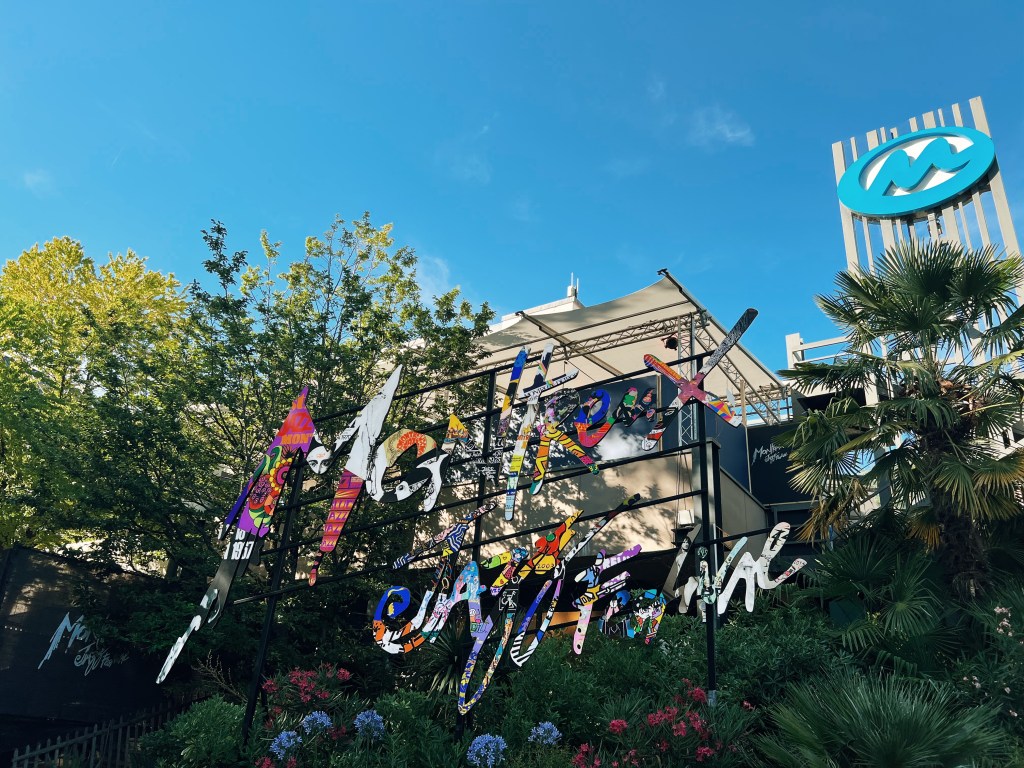
Peppered along the lake were hundreds of vendors, street artists, art installations, and music venues where so many talents came to perform. While some parts of the festival cost money, there are plenty of free venues to visit as well, which is what we did!

In between the fun nights out, the only other parts of Montreux we explored were some streets uphill atop the steep city and the pebbled lake, where we went sun-bathing and swimming with the locals.

If you love nature, adventure, and beautiful train rides, I highly recommend adding Switzerland to your bucket list!
 Archived Travels